From assumptions to executable definitions
Most analytics and AI projects fail because critical assumptions stay unverified until it’s too late. Our method makes them explicit, structured, and validated — before execution begins.
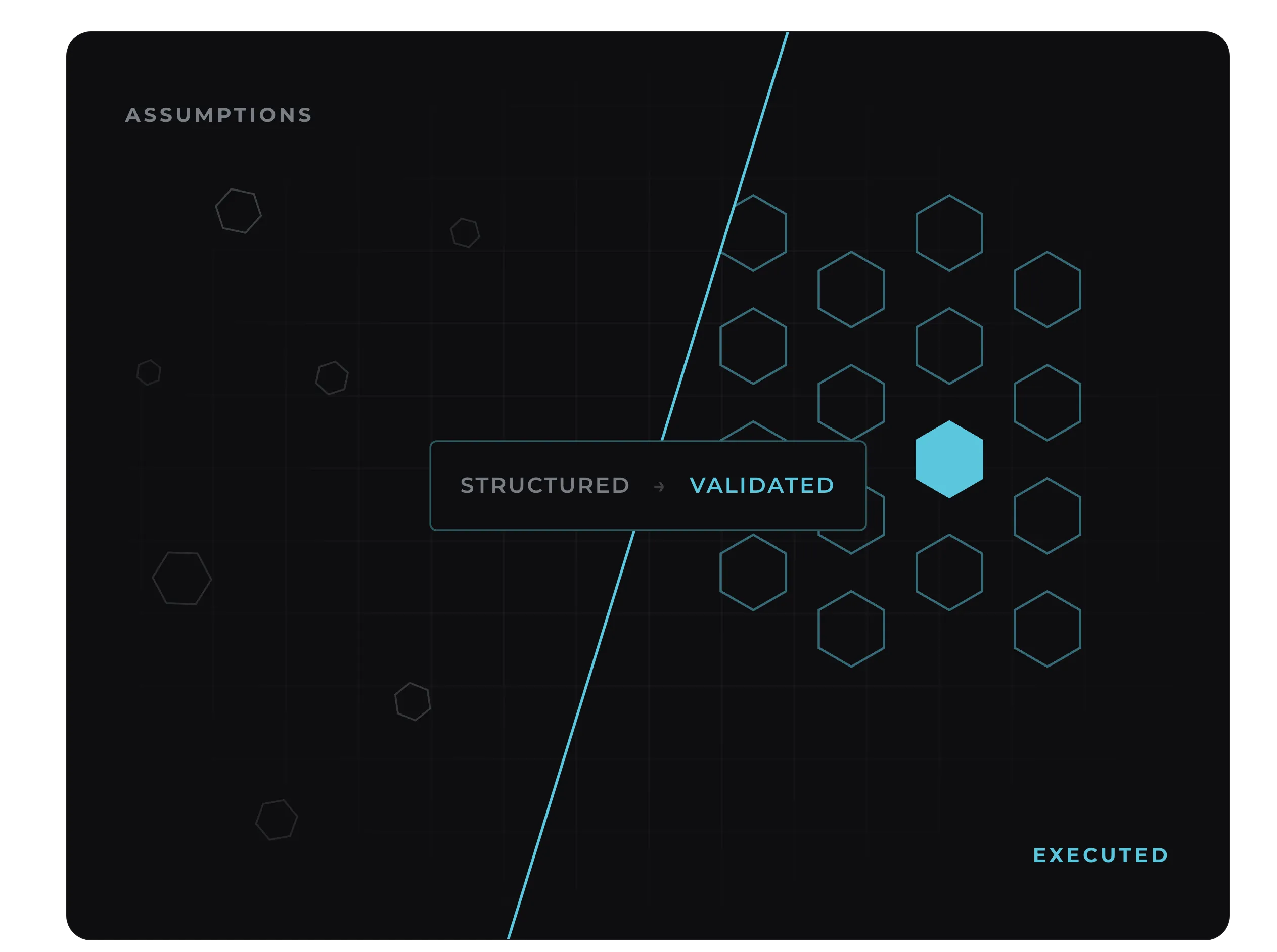
Why analytics and AI projects go off track
- Assumptions about data and KPIs stay implicit
- Definitions are incomplete or inconsistent
- Issues surface during implementation, not before
- Teams rely on meetings instead of structured input
- Responsibility for answers is unclear
Principles behind the method
-
Deliver value from the first project
Most approaches require building a complete data foundation first. Our method starts from a real project and delivers value immediately, while improving every project that follows.
-
Work with real inputs, not ideal ones
Projects rarely start with clean or complete inputs. Our method uses what already exists — documents, catalogs, spreadsheets, and people’s knowledge — and makes it actionable.
-
Make assumptions visible early
Unverified assumptions are the main source of failure. Our method surfaces and validates them early, before they impact execution.
-
Define at the level where projects fail
Not everything needs detail. Focus on what can delay or break delivery — data availability, grain, logic, and dependencies.
-
Use AI to accelerate, not replace judgment
AI helps explore, structure, and coordinate information. Final decisions and validation stay with people.
-
Own it in-house, reuse it across projects
When your team owns the definitions, they don’t get lost. Each project builds on the previous one instead of starting from zero.
A structured way to define before you build
The method starts with what already exists, surfaces hidden assumptions, and validates definitions before execution.
-
Start from what exists
Use existing documents, data catalogs, and prior work instead of starting from scratch.
-
Surface assumptions
Identify what’s known, what’s assumed, and what’s missing across data, KPIs, and expected outcomes.
-
Structure the definition
Define decisions, KPIs, business questions, and outputs in a clear format that supports execution.
-
Validate continuously
Catch missing data, inconsistencies, and scope gaps as you define — not during implementation.
-
Execute with confidence
Use validated definitions to guide teams, vendors, or AI tools without costly surprises.
What changes when you use our method
- Start with assumptions
- Define inconsistently
- Discover issues mid-delivery
- Rely on meetings
- Rework and delays
- Start from real context
- Structured, consistent definitions
- Issues identified early
- Targeted, asynchronous input
- Predictable execution
More valuable with every project
Validated definitions don’t disappear after delivery. They become reusable building blocks, reducing effort and improving consistency across future projects.
Our method is built into Decision Formula
Decision Formula operationalizes the method so teams can apply it consistently across projects — without relying on ad-hoc processes or individual experience.